Introduction
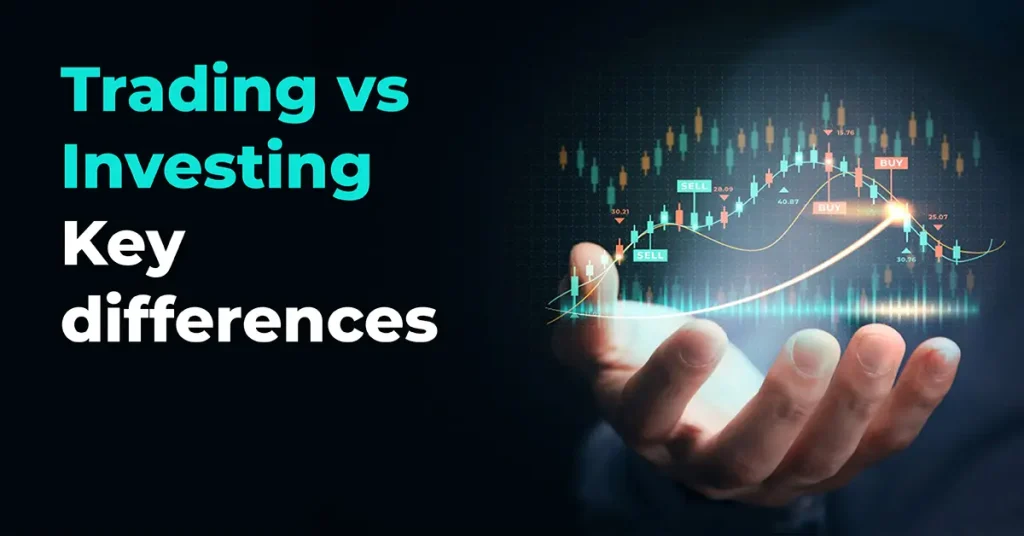
In today’s fast-paced financial world, understanding investing & trading has become essential for anyone looking to grow their wealth and secure their financial future. With the rise of digital platforms and easy access to financial markets, more people than ever are exploring ways to earn money through stocks, cryptocurrencies, and other assets. However, many beginners often get confused between trading vs investing, assuming they are the same when, in reality, they involve very different strategies, timeframes, and risk levels.
Investing typically focuses on long-term growth, where individuals buy assets and hold them for months or even years to benefit from gradual value appreciation. On the other hand, trading is more short-term and involves buying and selling assets frequently to take advantage of market fluctuations. Understanding the difference between investment and trading is crucial because it helps you choose the right approach based on your financial goals, risk tolerance, and available time.
Additionally, with the growing popularity of mobile platforms, many beginners are searching for a trading app without investment to practice and learn before risking real money. At the same time, concepts like trade investment—which combines both strategies—are gaining attention among smart investors who want to diversify their income sources.
This guide will help you clearly understand investing & trading, explore their key differences, and learn how to get started step by step. Whether you are a beginner or someone looking to improve your financial knowledge, this article will provide valuable insights to help you make smarter and more confident financial decisions in today’s dynamic market.
Trading App Without Investment
For beginners who want to learn trading without risking money, a trading app without investment is an excellent starting point. These apps allow users to practice buying and selling assets like stocks, forex, and cryptocurrencies using virtual money instead of real funds, making them completely risk-free.
Most of these platforms offer what is known as a demo account or paper trading feature. In this setup, users are given a virtual balance (for example, $10,000) and can trade in real market conditions. This helps beginners understand how the market works, test strategies, and build confidence before investing real money.
There are several popular apps available today. For example, apps like TradePlay – Demo Trading provide real-time market data and allow users to trade stocks, forex, crypto, and indices without any financial risk. Similarly, apps like Zero Investment Trading focus on teaching trading concepts while allowing users to simulate trades in a structured learning environment.
These apps are especially useful in countries like Pakistan, where many beginners hesitate to invest due to financial risks. They provide a safe environment to learn market behavior, understand price movements, and develop trading skills without any upfront capital.
However, it’s important to understand that while a trading app without investment is great for learning, it does not generate real profits. The experience may also differ slightly from real trading, where emotions, real money risk, and market conditions can impact decisions.
Overall, these apps are perfect for beginners who want to gain knowledge, practice strategies, and prepare themselves before entering real financial markets. Starting with a demo trading app can significantly improve your chances of success when you eventually trade with real money.
Difference Between Investment and Trading

The difference between investment and trading lies mainly in their approach, time horizon, and goals. Investing is a long-term strategy where individuals buy assets such as stocks, mutual funds, or real estate and hold them for months or years to build wealth gradually. Investors focus on the fundamental strength of an asset, aiming for steady growth, dividends, or long-term returns. In contrast, trading is a short-term activity that involves frequently buying and selling assets to take advantage of market price fluctuations. Traders rely more on technical analysis, charts, and market trends to make quick decisions and generate profits in a shorter period. When comparing trading vs investing, investing is generally considered less risky and requires patience, while trading carries higher risk and demands constant attention, skill, and market knowledge. Ultimately, choosing between investing & trading depends on your financial goals, risk tolerance, and the amount of time you can dedicate to managing your money.
Trade Investment
The concept of trade investment refers to combining both investing and trading strategies to maximize returns while managing risk. Instead of choosing only one approach, many individuals adopt a balanced method where they invest a portion of their money for long-term growth and use the remaining funds for short-term trading opportunities. This strategy allows them to benefit from the stability of investing while also taking advantage of quick profit opportunities in the market.
In a typical trade investment approach, a larger percentage of capital—such as 60% to 80%—is allocated to long-term investments like stocks, mutual funds, or ETFs. These investments are held over time to generate consistent returns. The remaining portion—around 20% to 40%—is used for trading, where individuals actively buy and sell assets based on market trends and price movements. This combination helps diversify risk and creates multiple income streams.
One of the biggest advantages of trade investment is flexibility. If the market is stable, your long-term investments continue to grow. If there are short-term opportunities, trading allows you to earn additional profits. However, it’s important to maintain discipline and avoid overtrading, as excessive risk-taking can lead to losses.
Overall, trade investment is a smart strategy for those who want the best of both worlds—steady wealth creation through investing and faster gains through trading—while maintaining a balanced and diversified financial portfolio.
Trading vs Investing
When comparing trading vs investing, the main difference lies in how and when you aim to make profits. Investing is a long-term approach where individuals buy assets and hold them for an extended period, allowing their value to grow over time. Investors focus on strong fundamentals, company performance, and long-term market trends to build wealth gradually with relatively lower risk.
On the other hand, trading is a short-term strategy that involves frequent buying and selling of assets to take advantage of price fluctuations. Traders rely on technical analysis, charts, and market timing to earn quick profits. While trading can offer faster returns, it also comes with higher risk and requires constant monitoring of the market.
In simple terms, trading vs investing is about time and strategy—investing is slow and steady, while trading is fast and active. The best choice depends on your financial goals, risk tolerance, and how much time you can dedicate to managing your investments.
Difference Between Foreign Trade and Foreign Investment
The difference between foreign trade and foreign investment lies in their purpose, nature, and how countries interact economically on a global level. Foreign trade refers to the exchange of goods and services between countries through imports and exports. For example, when a country sells its products to another country or buys goods from abroad, it is engaging in foreign trade. The main goal of foreign trade is to meet demand, expand markets, and boost economic growth through international exchange.
On the other hand, foreign investment involves investing capital in another country’s economy. This can be done by individuals, companies, or governments in the form of Foreign Direct Investment (FDI)—such as opening factories or businesses—or Foreign Portfolio Investment (FPI), like buying stocks or bonds in foreign markets. The purpose of foreign investment is to earn returns, expand business operations, and gain long-term financial benefits.
In simple terms, foreign trade is about buying and selling goods across borders, while foreign investment is about putting money into another country’s economy to generate profit. Both play a crucial role in global economic development, but they operate in different ways. Understanding the difference between foreign trade and foreign investment helps individuals and businesses make better decisions in international markets.
Conclusion
Understanding investing & trading is essential for anyone who wants to grow their wealth and make smarter financial decisions. While both approaches involve participating in financial markets, they differ significantly in terms of strategy, time commitment, and risk. Investing focuses on long-term growth and stability, making it suitable for those who prefer a steady and less risky approach. In contrast, trading offers opportunities for quick profits but requires more time, skill, and the ability to handle higher risks.
We also explored key concepts such as the difference between investment and trading, the idea of trade investment, and how beginners can start using a trading app without investment to gain experience. Additionally, understanding the difference between foreign trade and foreign investment provides a broader view of how global markets operate.
In the end, there is no one-size-fits-all answer when it comes to trading vs investing. The right choice depends on your financial goals, risk tolerance, and available time. Some people may benefit from focusing on long-term investing, while others may prefer active trading—or even a combination of both. By gaining the right knowledge and staying consistent, you can build a strong financial future and make confident decisions in the world of investing & trading.
What is the difference between investment and trading?
Investing is a long-term strategy focused on wealth growth, while trading is short-term and aims to profit from market fluctuations.
Which is better: trading vs investing?
It depends on your goals and risk tolerance. Investing is safer for long-term growth, while trading offers faster returns but higher risk.
Can beginners start trading without investment?
Yes, beginners can use a trading app without investment to practice and learn market strategies risk-free.
What is a trading app without investment?
It’s an app that allows virtual trading with demo money, helping users gain experience before investing real funds.
What is trade investment?
Trade investment combines both investing and trading strategies, allowing for long-term wealth growth and short-term profit opportunities.
Is trading riskier than investing?
Yes, trading generally carries higher risk due to frequent market fluctuations, while investing focuses on long-term stability.
Can I do both investing and trading at the same time?
Absolutely. Many people use a trade investment approach to diversify their portfolio and balance risk with potential returns.
What is the difference between foreign trade and foreign investment?
Foreign trade is about buying and selling goods across borders, while foreign investment involves putting capital into another country’s economy for profit.
How long should I invest before seeing returns?
Long-term investments usually take years to grow, depending on the type of asset and market conditions.
Which is best for beginners: investing or trading?
Beginners often benefit from starting with investing due to lower risk, but demo trading apps are also great for learning without financial risk.